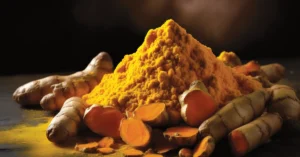
Curcumin is the primary active compound in turmeric, a spice widely used in Asian cuisine and traditional medicine. Apart from its culinary applications, curcumin has been studied extensively for its pharmacological properties, including its potential neuroprotective effects. Its excellent safety profile makes it an attractive candidate for long-term use in managing chronic conditions, contributing to its popularity among researchers exploring treatments for neurodegenerative diseases (1)(2).
Mechanisms of Action
Curcumin’s beneficial effects in neurological contexts can be attributed to its influence on several key biochemical pathways.
Antioxidant Activity
One of the major mechanisms through which curcumin exerts its neuroprotective effects is its ability to function as a potent antioxidant. By neutralising free radicals and reducing oxidative stress, curcumin protects neuronal cells from damage, which is crucial in neurodegenerative diseases where oxidative stress is often elevated (5)(6).
Anti-inflammatory Effects
Chronic inflammation is a hallmark of many neurological disorders. Curcumin can modulate inflammatory pathways, primarily by inhibiting the nuclear factor kappa-light-chain-enhancer of activated B cells (NF-kB) signaling pathway, which plays a significant role in pro-inflammatory cytokine production. By reducing inflammation, curcumin helps maintain neuronal health and function (5).
Neurotransmitter Modulation
Research has shown that curcumin can also influence the levels of several neurotransmitters, including serotonin and dopamine. This property is particularly beneficial for conditions like depression associated with neurodegeneration, where neurotransmitter dysregulation is common (6).
Application in Alzheimer’s Disease
Alzheimer’s Disease (AD) is characterized by the accumulation of amyloid plaques and tau tangles in the brain, leading to cognitive decline. Curcumin’s ability to modulate amyloid precursor proteins and promote their clearance from the brain has been documented in various preclinical studies.
Curcumin has also shown promise in improving cognitive function and slowing disease progression in animal models of AD. For instance, studies utilising curcumin-enhanced formulations indicated a reduction in amyloid burden and improved learning and memory performance (5)(6).
Potential in Parkinson’s Disease
Parkinson’s Disease (PD) is primarily caused by the degeneration of dopaminergic neurons in the substantia nigra region of the brain. Curcumin is being investigated for its neuroprotective effects against this neurodegeneration. Animal studies have shown that curcumin can improve motor function and increase dopamine levels in the brain (5).
Additionally, several clinical trials have examined curcumin’s role in improving cognitive and motor symptoms in PD patients. Results indicate that curcumin may enhance cognitive function and overall quality of life in those suffering from PD (5).
Role in Huntington’s Disease
Huntington’s Disease (HD) is a genetic disorder characterized by progressive motor dysfunction and cognitive decline. The anti-inflammatory properties of curcumin may offer neuroprotection in HD. Studies in animal models have demonstrated that curcumin can improve motor coordination and reduce neuronal degeneration associated with the disease (6).
Moreover, curcumin’s capacity to influence mitochondrial function may be particularly beneficial in HD, as mitochondrial dysfunction is a critical feature of the disease’s pathology (5).
Huntington’s Disease (HD) is a genetic disorder characterized by progressive motor dysfunction and cognitive decline. The anti-inflammatory properties of curcumin may offer neuroprotection in HD. Studies in animal models have demonstrated that curcumin can improve motor coordination and reduce neuronal degeneration associated with the disease (6).
Moreover, curcumin’s capacity to influence mitochondrial function may be particularly beneficial in HD, as mitochondrial dysfunction is a critical feature of the disease’s pathology (5).
Multiple Sclerosis (MS) is an autoimmune disorder that results in the degradation of myelin sheaths around nerve fibers. Curcumin has been shown to exhibit immunomodulatory effects, which could benefit MS patients. By reducing the production of pro-inflammatory cytokines and promoting the repair of damaged myelin, curcumin may help mitigate some effects of MS (6).
Innovations in Delivery Systems
Despite curcumin’s promising properties, its clinical use is limited by its low bioavailability due to poor absorption, rapid metabolism, and extensive systemic elimination.
To enhance curcumin’s therapeutic efficacy, researchers are exploring various innovative delivery methods:
Nanoparticle Formulations
Nanoparticles have been extensively studied for delivering curcumin efficiently across the blood-brain barrier. These targeted delivery systems can improve the solubility and stability of curcumin while enhancing its neuroprotective effects in animal models of neurodegenerative diseases (4).
Liposomal Delivery
Liposomal formulations encapsulating curcumin have also shown promise. These formulations can improve the stability of curcumin and enhance its bioavailability, leading to greater therapeutic outcomes in neurological models .
Clinical Trials and Future Directions
As interest in curcumin continues to grow, several clinical trials are underway. These trials aim to assess curcumin’s efficacy in managing symptoms associated with various neurodegenerative diseases, including AD and PD. Preliminary findings have shown encouraging results, but more extensive trials are needed to establish standardized dosing protocols and determine long-term safety and efficacy.
Furthermore, ongoing studies are focused on combining curcumin with other phytochemicals or conventional medications to tackle multiple aspects of neurological diseases simultaneously. This multimodal approach may enhance the overall effectiveness of treatments (5)(6).
Conclusion
Curcumin represents a potential breakthrough in the management of various neurological disorders due to its robust neuroprotective properties. Its safety profile, coupled with emerging evidence from both preclinical and clinical studies, positions curcumin as a viable alternative or supplement in the treatment of devastating neurological conditions. However, overcoming the challenges of bioavailability through innovative delivery systems will be crucial in maximizing its therapeutic potential.
With continued research, curcumin may play a vital role in improving the quality of life for patients with neurodegenerative diseases, making it an important area for future investigation in neurology.
Sources
1. Neuroprotective Effects of Curcumin https://www.ncbi.nlm.nih.gov/pmc/articles/PMC2527619/
2. Neuroprotective effects of curcumin https://pubmed.ncbi.nlm.nih.gov/17569212/
3. M. Nabiuni. (2024). [PDF] Neuroprotective Effects Of Curcumin | Semantic Scholar. semanticscholar.org. https://www.semanticscholar.org/paper/Neuroprotective-Effects-Of-Curcumin-Nabiuni-Nazari/6d13e91b38535dcd035c410d945bd2e900291f84
Salehi, B., Calina, D., Docea, A., Koirala, N., Aryal, S., Lombardo, D., Pasqua, L., Taheri, Y., Marina Salgado Castillo, C., Martorell, M., Martins, N., Iriti, M., Suleria, H., & Sharifi-Rad, J. (2020).
4. Curcumin’s Nanomedicine Formulations for Therapeutic Application in Neurological Diseases. Journal of Clinical Medicine. https://doi.org/10.3390/jcm9020430
5. Nebrisi, E. E. (2021). Neuroprotective Activities of Curcumin in Parkinson’s Disease: A Review of the Literature. International Journal of Molecular Sciences. https://doi.org/10.3390/ijms222011248
6. Genchi, G., Lauria, G., Catalano, A., Carocci, A., & Sinicropi, M. S. (2024). Neuroprotective Effects of Curcumin in Neurodegenerative Diseases. Foods. https://doi.org/10.3390/foods13111774